
main
How to Identify Fake Loan Apps in India and Avoid Digital Lending Scams
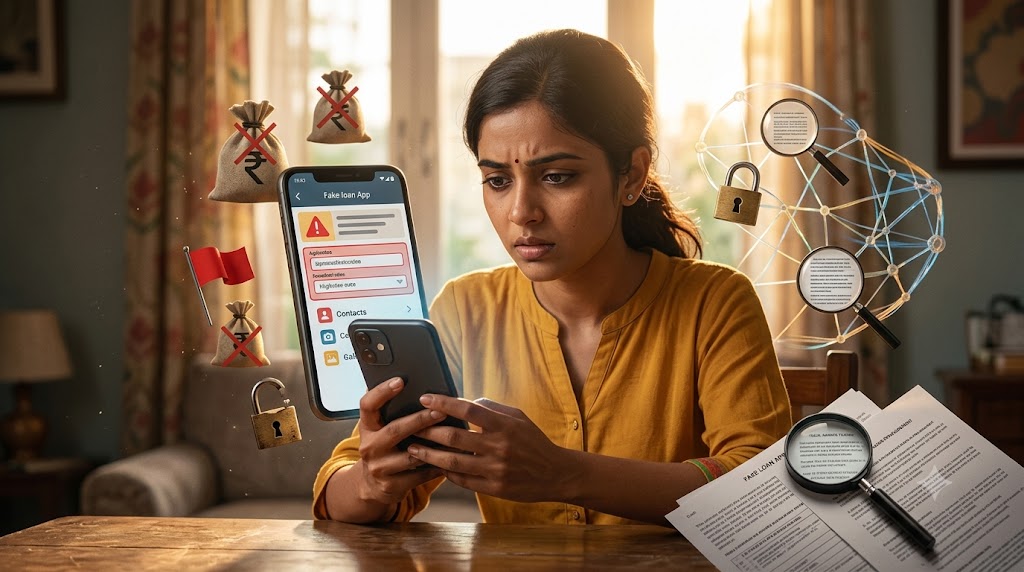
Applying for a loan online can be convenient, especially when you need money for medical expenses, education, home improvements, or an unexpected financial emergency. However, the growing use of digital lending has also made it important to understand how fake loan apps operate and how to protect yourself from online loan fraud.
Some fraudulent loan apps promise instant approval, minimal documentation, and attractive interest rates. Others may misuse personal information, demand suspicious payments, or threaten borrowers through abusive recovery practices.
So, how can you identify fake loan apps in India? What should you check before applying for an online loan, and what should you do if you become a victim of a digital lending scam?
In this guide, Cito Wealth explains the warning signs of fake loan applications, practical ways to verify a lender, and steps you can take to protect your money and personal information.
What Are Fake Loan Apps?
Fake loan apps are mobile applications or web platforms that use misleading or fraudulent practices to attract borrowers. They may claim to offer personal loans, emergency loans, or other forms of credit without following legitimate lending practices.
Some fraudulent platforms collect advance payments without providing a loan. Others misuse sensitive information, impose misleading charges, or harass borrowers after accessing their personal data.
It is important to understand that not every digital loan application is fraudulent. Banks and regulated non-banking financial companies (NBFCs) may offer loans through their own apps or authorised lending service providers.
The key is to verify the actual lender, understand the loan terms, and check whether the app's claimed association with a regulated financial institution can be confirmed.
10 Warning Signs of Fake Loan Apps in India
Recognising the warning signs before submitting a loan application can help you avoid financial loss and unnecessary risks.
1. Guaranteed Loan Approval Without Proper Checks
Be cautious if an app promises guaranteed loan approval regardless of your income, credit history, or repayment capacity.
Legitimate lenders generally assess relevant information before deciding whether to approve a loan. Although eligibility requirements vary, claims of guaranteed approval for everyone should prompt you to investigate further.
Do not rely solely on advertisements promising instant approval or loans without any meaningful verification.
2. Requests for Suspicious Upfront Payments
Some fraudulent loan providers demand money before releasing the approved loan. They may describe these payments as registration charges, security deposits, verification fees, or refundable processing fees.
An upfront payment request, particularly to an individual's personal UPI ID or bank account, should be treated as a serious warning sign.
Legitimate lenders may charge disclosed processing fees or other permitted charges. Therefore, a fee alone does not prove fraud. However, always verify the lender, obtain written details of the charges, and confirm the payment process through official channels before paying anything.
Never transfer money simply because someone claims that your loan will be cancelled unless you pay immediately.
3. No Clear Information About the Actual Lender
A trustworthy lending arrangement should clearly identify the bank or NBFC responsible for providing the loan.
Before applying, look for the lender's legal name, official website, customer support details, loan terms, and grievance redressal information.
If an app only displays a brand name, uses vague company details, or refuses to identify the actual lender, do not proceed until you can independently verify the information.
Remember that a professional-looking website or logo does not establish that a financial service is legitimate.
4. Excessive Permissions on Your Phone
Some suspicious loan applications request access to contacts, call logs, photos, files, or other information that is not reasonably necessary for the service being offered.
Such access can create privacy risks, particularly if personal information is later used for harassment or intimidation.
Review the permissions requested by an app before installing or using it. Be especially cautious when an app insists on access to unrelated personal information.
If an application demands intrusive permissions and does not explain why they are needed, consider using a different, independently verified lending channel.
5. Extremely Short Repayment Periods and Unclear Charges
A loan advertisement may highlight a small repayment amount while hiding important details about interest, fees, penalties, or the total amount payable.
Before accepting an offer, check:
-
The amount you will actually receive.
-
The interest rate and how it is calculated.
-
Processing fees and applicable taxes.
-
The repayment schedule and loan tenure.
-
Late payment charges and other applicable fees.
-
The total amount payable over the loan term.
Compare the Key Facts Statement (KFS), where applicable, and the written loan agreement rather than relying on promotional messages.
If the lender refuses to disclose the full cost of borrowing, stop the application until the terms are clear.
6. Pressure to Apply Immediately
Fraudulent operators may use urgency to prevent borrowers from checking the details carefully.
Messages such as "Offer expires in five minutes" or "Pay now to unlock your approved loan" can pressure people into making rushed decisions.
A legitimate financial decision should not require you to ignore basic verification.
Take time to read the terms, check the lender's identity, and confirm all charges before accepting a loan offer.
7. Fake Websites, Messages or Customer Support Numbers
Scammers may imitate the names, logos, and communication styles of established banks, NBFCs, or financial service providers.
They may send links through SMS, messaging applications, email, or social media advertisements.
Check the website address carefully and avoid links from unknown senders. If a company claims to represent a bank or NBFC, contact that institution using the contact information published on its official website.
Do not share OTPs, passwords, PINs, or banking credentials with someone who claims they need them to release a loan.
8. Threatening or Abusive Loan Recovery Practices
Some fraudulent loan apps use threatening messages, repeated calls, or intimidation to pressure borrowers into making payments.
They may also threaten to contact family members or misuse personal photographs and contact information.
Unethical recovery behaviour is a serious concern. However, borrowers should distinguish between legitimate collection of an overdue debt and harassment or threats.
If you receive abusive messages, preserve screenshots, call records, payment receipts, and other evidence. Report suspected fraud or criminal intimidation through the appropriate official channels.
9. No Proper Loan Agreement or Grievance Mechanism
Before accepting a loan, you should understand who is lending the money, what you are agreeing to repay, and how you can raise a complaint.
Be cautious if the app does not provide clear loan terms, a repayment schedule, lender details, or a way to contact customer support.
For digital lending arrangements involving regulated entities, applicable RBI requirements include borrower protection, transparency, data privacy, and grievance redressal.
10. Unusual Payment Instructions
Another warning sign is a request to transfer money to an unrelated individual, an unfamiliar account, or a payment destination that does not match the verified lender's instructions.
Do not assume that a payment request is genuine because it contains a company logo or a loan reference number.
Verify the payment details through the lender's independently confirmed official channels. Keep copies of the loan agreement, account details, and payment receipts.
How to Check Whether a Loan App Is Genuine in India
Before applying for a personal loan or another digital credit product, follow these practical verification steps.
Step 1: Check the Actual Bank or NBFC
Find out which regulated financial institution is responsible for lending the money.
If the app claims to work with a bank or NBFC, visit that institution's official site or contact its verified customer support team to confirm the relationship.
Do not rely only on the name displayed inside the app.
Step 2: Check the RBI Digital Lending App Directory
The Reserve Bank of India has introduced a public directory of Digital Lending Apps (DLAs) associated with regulated entities. The directory can help borrowers check an app's claimed association with a regulated lender.
Visit the RBI official website and look for the Digital Lending Apps directory.
Important: The directory is a verification aid, not a blanket endorsement or guarantee that an app is safe. RBI has stated that the directory is based on information submitted by regulated entities without independent validation of every entry. Verify the lender directly as well.
Step 3: Read the Loan Terms Before Accepting
Check the interest rate, fees, repayment schedule, penalties, and total amount payable.
For applicable digital loans, review the Key Facts Statement and other required disclosures. Do not accept an offer if important financial information is missing or unclear.
Step 4: Review the App's Permissions and Privacy Terms
Understand what information the application collects and why it needs that information.
Avoid granting unnecessary permissions. Do not share your banking passwords, PINs, or OTPs with anyone claiming to represent the lender.
Step 5: Verify Customer Support Independently
Look for a verifiable official website, customer service details, and a grievance redressal process.
Contact the lender using independently obtained details rather than relying on a phone number or link supplied by an unfamiliar agent.
Step 6: Keep Copies of All Documents
Save the loan agreement, Key Facts Statement, repayment schedule, lender communications and payment receipts.
These records can help you understand your obligations and provide evidence if you need to raise a complaint.
What Should You Do If You Have Been Scammed by a Loan App?
If you suspect that a fake loan app has taken your money or misused your information, act promptly.
1. Report Financial Cyber Fraud Immediately
If money has been transferred fraudulently, call India's cybercrime helpline 1930 as soon as possible. You can also file a complaint through the National Cyber Crime Reporting Portal.
Prompt reporting may help authorities and participating institutions take action, although recovery of the money is not guaranteed.
2. Contact Your Bank or Payment Provider
Notify your bank or payment service provider immediately. Share the transaction reference, amount, recipient details, and any available evidence.
Ask them to register your complaint and advise you on available steps to secure your account or dispute the transaction.
3. Secure Your Phone and Financial Accounts
If you installed a suspicious app, review its permissions and remove it if appropriate. Use your device's security tools to check for suspicious activity.
Change compromised passwords, secure your email and banking accounts, and contact your bank if you believe your credentials have been exposed.
If you suspect your phone has been compromised, use a trusted device to change sensitive account credentials.
4. Preserve Evidence
Keep screenshots, messages, call records, payment receipts, app details, website links, and complaint reference numbers.
Do not delete evidence that could help authorities investigate the incident.
5. Report Threats and Misuse of Personal Information
If someone threatens you, impersonates a lender or uses your photographs or contacts to intimidate you, preserve the evidence and report the conduct through the appropriate cybercrime or police channels.
You can also raise a complaint with the relevant regulated lender if the issue concerns a legitimate bank or NBFC. Use the lender's official grievance process and consult RBI's complaint mechanisms where applicable.
Do not make additional payments simply because a caller promises to remove threats or recover your lost money for a fee.
How to Apply for an Online Loan More Safely
Digital lending can make borrowing more convenient when you choose a legitimate lender and understand the financial commitment.
Follow these precautions before submitting an online loan application:
-
Verify the lender: Confirm the bank or NBFC responsible for the loan.
-
Compare loan offers: Evaluate the interest rate, fees, tenure, and total repayment amount.
-
Review your affordability: Make sure the EMI fits your income, existing commitments, and regular expenses.
-
Read the agreement: Understand the repayment terms and consequences of missing payments.
-
Protect your personal information: Share only the information required through appropriate, verified channels.
-
Avoid suspicious links: Access financial services through official websites or verified applications.
-
Keep written records: Save the relevant disclosures, agreement, and payment receipts.
The objective is not simply to find a loan quickly. It is to choose a borrowing option that is transparent, appropriate for your financial circumstances, and manageable over the repayment period.
How Cito Wealth Can Help You Explore Loan Options
Choosing a loan involves more than comparing advertised interest rates. You also need to understand eligibility requirements, repayment commitments, applicable fees, and the suitability of different borrowing options.
Cito Wealth helps individuals explore financial and loan-related solutions based on their requirements. If you are considering a personal loan, home loan, business loan, or another financing option, you can contact Cito Wealth to discuss the available options and the information you should review before proceeding.
Before accepting any loan offer, make sure you independently verify the actual lender, read the loan documents, and understand the total cost of borrowing. You should also review the eligibility criteria and documentation requirements before applying. Learn more in our guide to personal loan eligibility and required documents.
Looking for guidance on your borrowing options?
Visit Cito Wealth to explore the available financial services and contact the team to discuss your requirements.
Always assess your repayment capacity and review the applicable loan terms before borrowing. Loan availability, eligibility, interest rates, and approval decisions depend on the relevant lender's criteria.
Frequently Asked Questions About Fake Loan Apps in India
1. How can I identify a fake loan app in India?
Look for warning signs such as guaranteed approval without meaningful checks, unclear lender details, suspicious advance payment requests, excessive permissions, and missing loan disclosures. Verify the app's claimed association with a regulated lender through official sources before applying.
2. How can I check whether an online loan app is genuine?
Identify the actual bank or NBFC providing the loan, verify the relationship through official channels, consult the RBI's Digital Lending Apps directory, and read the loan terms. No single check guarantees that an app is safe, so use multiple verification steps.
3. Are all instant loan apps fraudulent?
No. Some legitimate banks and regulated NBFCs provide digital lending services, including through lending service providers. However, instant approval advertisements should not replace checks of the lender's identity, loan terms, and applicable charges.
4. Can a loan app ask for an upfront fee?
Legitimate lending arrangements may include disclosed processing fees or other permitted charges. However, suspicious advance payment demands, especially requests to transfer money to an individual's account before a loan is released, should be treated cautiously. Verify the fee and payment instructions directly with the lender.
5. What should I do if a fake loan app threatens me?
Preserve the messages, screenshots, call records, and other evidence. Report suspected criminal conduct through the appropriate cybercrime or police channels. If financial fraud has occurred, contact your bank and call 1930 promptly. Do not pay additional money simply to stop threats.
6. Where can I report a fake loan app in India?
You can report suspected cybercrime through the National Cyber Crime Reporting Portal or by calling 1930 for financial cyber fraud. You can also notify your bank or payment provider and use the relevant regulator or lender complaint mechanism where appropriate.
7. Can a fake loan app misuse my contacts and photographs?
Yes. An app that obtains unnecessary access to your personal information may create privacy risks. Review app permissions carefully, revoke unnecessary access, and preserve evidence if your data is misused. If you receive threats or experience fraud, report the incident through appropriate official channels.
Final Thoughts
Fake loan apps and digital lending scams can expose borrowers to financial loss, privacy violations, and harassment. Taking a few minutes to verify the lender, understand the loan agreement, and review the app's permissions can help reduce these risks.
Before applying for any online loan, check the lender's identity, compare the complete borrowing costs, and avoid making rushed financial decisions based on attractive advertisements.
If you need help exploring borrowing options, Cito Wealth can be a starting point for discussing your requirements. Make informed decisions, verify the lender independently, and choose a loan only when the repayment commitment is suitable for your financial situation.
Disclaimer: This article is for general financial awareness and educational purposes only. It does not constitute financial, legal, or investment advice. Regulatory requirements and reporting procedures may change; consult the relevant official authorities for current guidance.